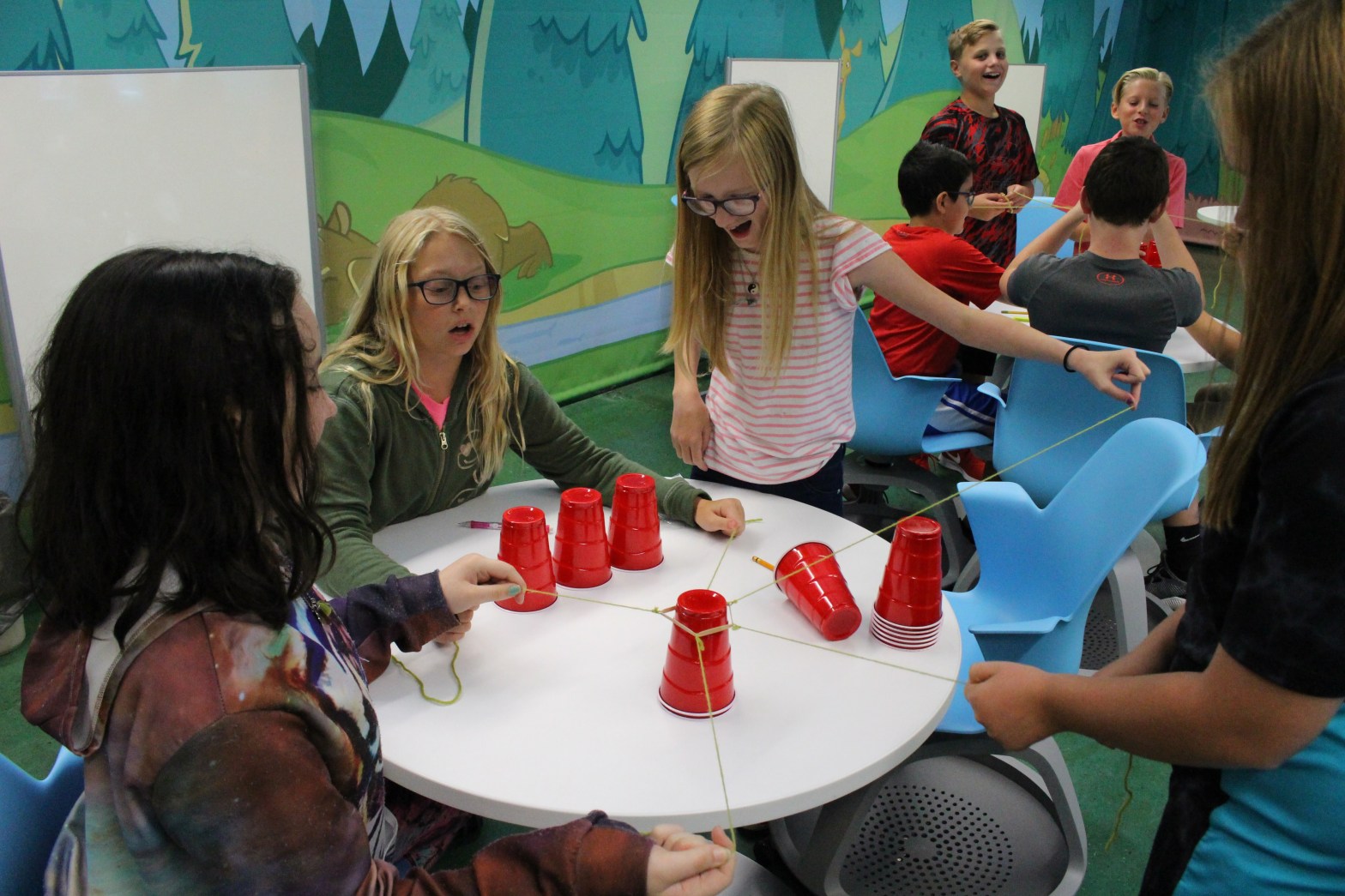
I am jealous of the kids in school today. Yes, I’m going to throw out the, “when I was your age” thing, because when I was their age, my education consisted of individual core curriculum lessons, taught in separate classes, with reading passages, informational text, and weekly quizzes and tests. If we made anything of substance, it was a craft to hang on the wall, or give as a gift. I cannot remember a single lesson where we combined two different subjects together.
Today’s elementary students (and even Pre-K) are experiencing education in a very different way than 30+ years ago. Not only is education more hands-on, it is integrated with multiple core classes combined together. I teach in a building that combines two schools together into one building. We have a K-4 side and a 5-6 side, and we share our resources such as the library and the cafeteria. I teach in the 5-6 middle school portion of the building, but it doesn’t mean that I don’t see the fun projects the elementary students are exploring.
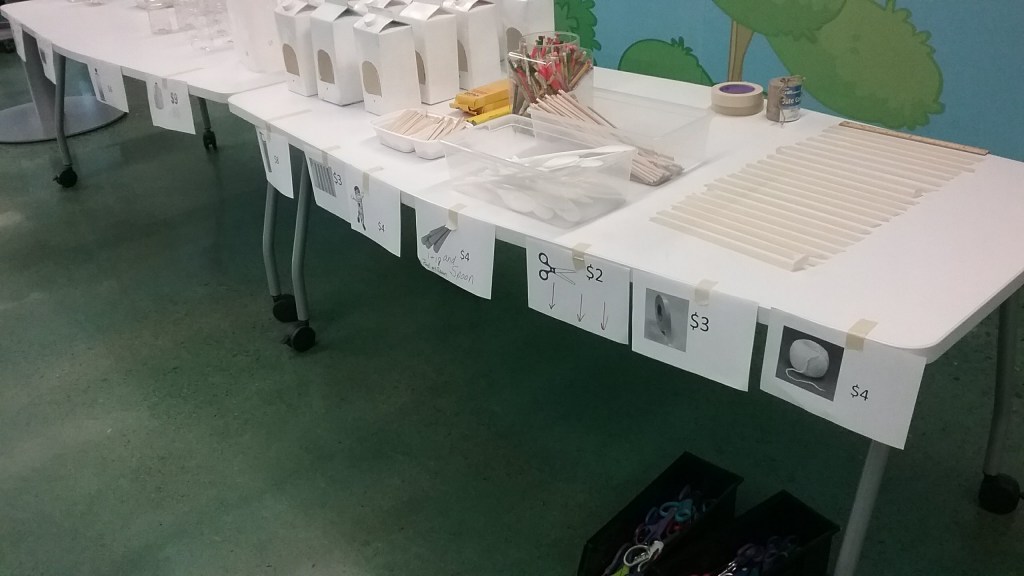
One lesson that stands out to me incorporated science and math. Second grade students built bird feeders out of recycled 1/2 gallon milk jugs. On one table, the students had many items they could choose from to engineer the birdhouse. Students were “given” a set amount of money (say, $20) to build the bird feeder. Students had to use critical thinking skills in choosing their supplies, because the sturdier the material, the more expensive it was. If students did not have enough money, they needed to use creativity to build the best bird feeder they could.
Students working on lessons such as the one described above are what makes me so jealous of those students. The closest thing to math and bird feeders I had was probably in a well written (and confusing) math word problem!
Students in the Pre-K to 4 have access to so many digital resources. I have seen kindergartners use BeeBots to navigate a mat symbolizing their local community, First graders using green screens for book reviews, and fourth graders using Minecraft to build digital colonies to represent the New World. All of these activities incorporate digital resources with multiple core class curriculums.
STEM, STEAM, STREAM, How many more letters can we add??
I am one of STEAM’s biggest advocates. Adding that “A,” in my opinion, is a wonderful addition. I believe that without Art, our world’s technology would look dull and boring. Can you imagine the new iPhone 11 with wires hanging out, and squared off edges? How did Apple develop beautiful products? Artists! Engineers can make it work, but art makes it beautiful. Incorporating design, music and other art products into lessons, is something as educators that we should not overlook.
When my students are Inventing in my classroom (an annual event), I always stress Design as an important part of the process. My students can be well versed in adding components to inventions (i.e. sensors to elderly canes), but they lack the foresight of making it “look cool.” Hey – elderly people like looking cool too! When we start adding additional letters to STEAM, we start to lose focus on what STEM education was supposed to be in the first place.
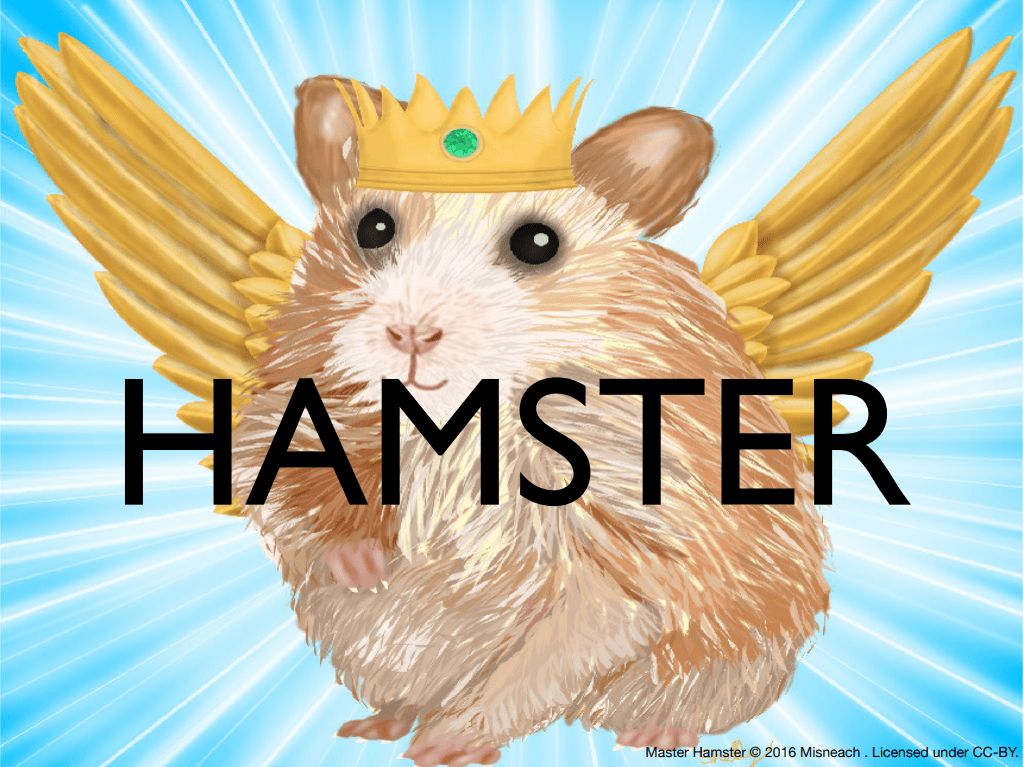
Last summer, I attended the ISTE 2019 conference in Philadelphia, PA. I sat in one workshop hosted by Sylvia Martinez, co-author of the Invent to Learn book. I whole-heartily agree with her, that beyond STEAM, adding more letters makes the product seem less ingenious. I see the need for literacy in all subject areas, including STEAM, but adding an “R” seems a bit redundant. Why not add Health to the mix, and you can get HAMSTER!
Lastly, along with everything STEAM in education, teachers need to work with students on the soft skills that employers need for the open job force. According to the article The Skills Colleges and Employers Are Looking For, by John McCarthy, he describes a conference he attended where a panel of people were describing the skills needed that students should develop by the time they start college or a career. In the article, he lists several elements of what we call the four C’s.
Recently, in my school, my students put their minds to the future, where they needed to select a future career of what they wanted to be when they grow up. After the activity, during a reflection, I spoke with the students about needing the four C’s with every single one of those careers. Some students wanted to be a chef. A chef needs to be able to communicate with his/her staff, collaborate with everyone in the kitchen, be creative with the menu, and critically think through issues that come up in the kitchen, such as running out of a vital ingredient.
My students employ the four C’s in all of their projects, especially when inventing in groups. My students collaborate with each other in these projects where, without the four C’s, their project suffers. I routinely tell my students that I am not here to teach them how to invent, but how to practice the four C’s.
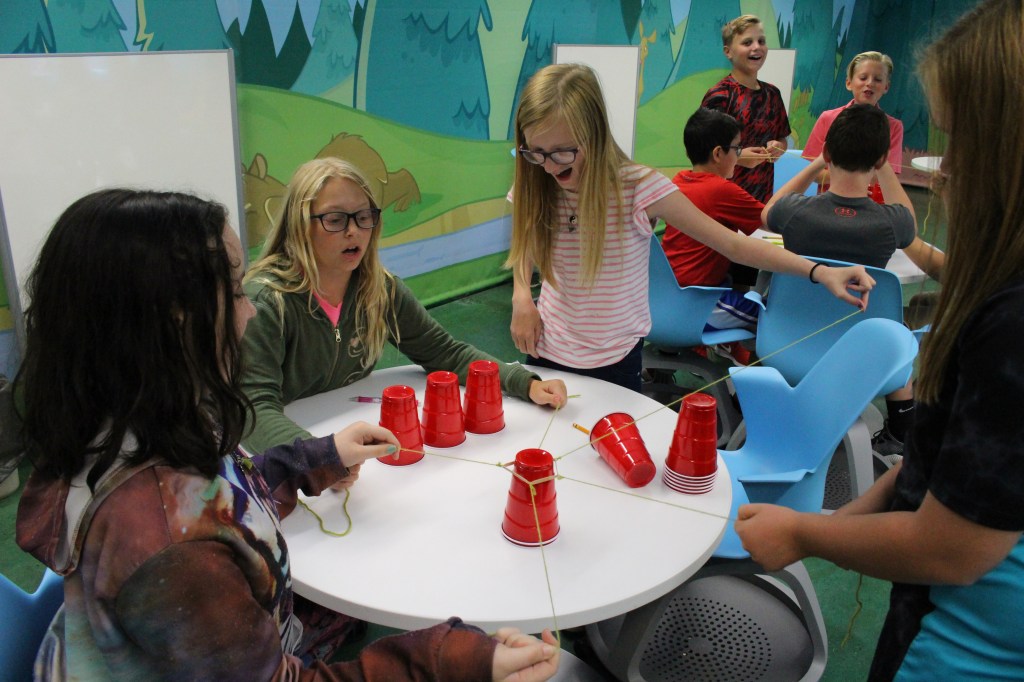
One fun project I found on Pinterest that combines an ice-breaker activity with the Four C’s. Students use a “tool” to arrange plastic cups in a pyramid shape. They are not allowed to touch the cups with their hands. Students that communicate, collaborate, critically think, and are creative fly through the challenge with ease.
With all of these great projects I get to have my students work on, I know I am lucky to have these resources available to me. I guess you can say that other teachers may be jealous of my job! I am no longer jealous of my students experiences, because I know that what I do is important to their future. Even if people still think that STEM education is a FAD that will weather away in a few years, I cannot see that happening. If anything, the only way STEAM education will “go away” is for it to become so integrated into our core curriculum, it no longer becomes a separate silo in our field of education, it becomes the foundation on which all learning starts.
 Building Up STEAM