
What do first grade teachers, a district administrator (and author), and technology integration have in common? Not enough time!
That was the most common answer to the “biggest hurdle” in implementing educational technology best practices: We need more time!
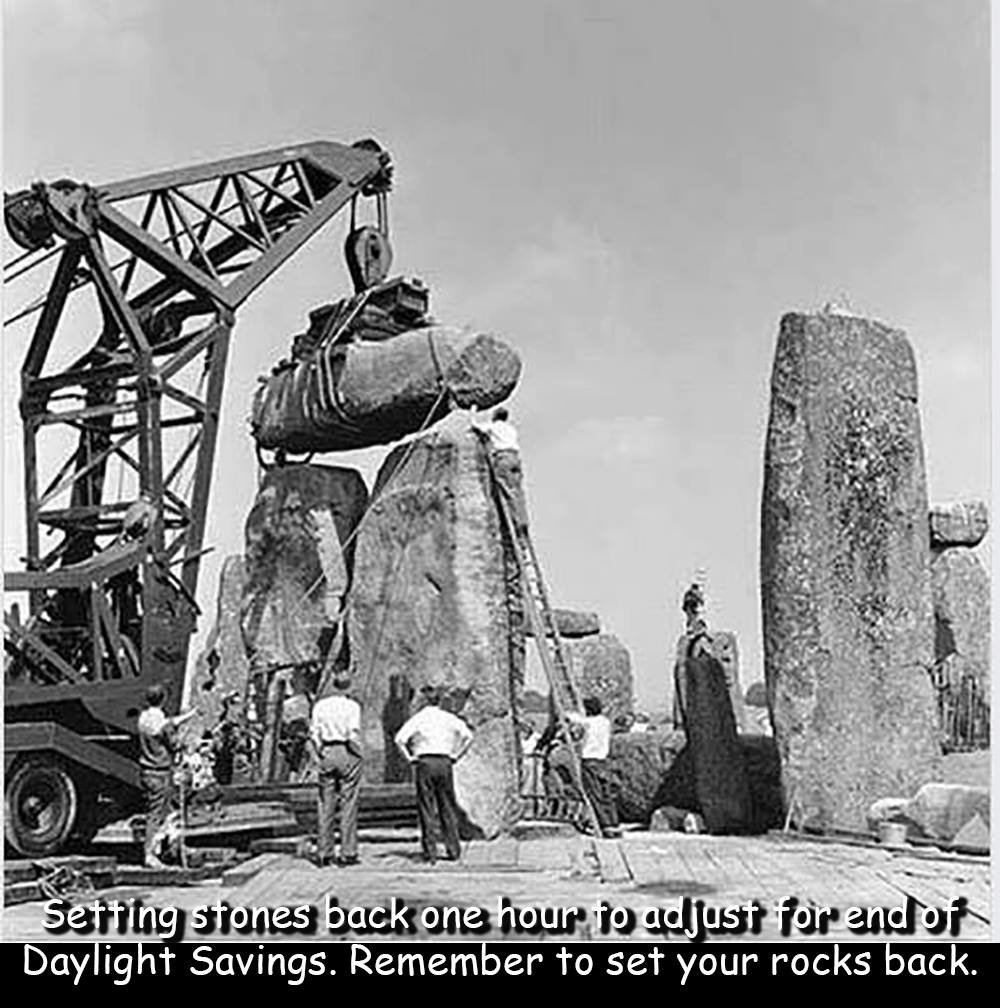
Today marks another new Daylight Savings Time. Thankfully, we will “get” another hour’s worth of sunshine tonight, but it does not give us more time to explore Ed-Tech in our classrooms. Teachers are asking for more time, and administrators would love to give more time. Where do we find it? Well, if I knew the answer, I would probably be relaxing with all of the other perfect EdTech teachers…
Through my online graduate course, I had an opportunity to conduct an online interview with several first grade teachers and one District Administrator. The first grade teachers wished to remain anonymous, and I will respect their wishes. The District Administrator, who I also had the pleasure of “interviewing” (read: filling out my online questionnaire) was Jacie Maslyk, an Assistant Superintendent in the Hopewell Area School District.

SIDE NOTE: Ms. Maslyk is also the author of STEAM Makers: Fostering Creativity and Innovation in the Elementary Classroom, which I have read (and loved!) and Remaking Literacy: Innovative Instructional Strategies for Maker Learning, Grades K-5 (which I cannot wait to get my hands on!).
Have you always been in Educational Technology? If not, what started you on this path?
Experience in Educational Technology varied between the four participants in the questionnaire. Ms. Maslyk expressed faith in her PLN to help support her through this journey as she learns alongside other educators. “I don’t have to be an expert in AR/VR or AI or whatever new tech tool as long as I am connected to someone who can help me grow in my learning.”
The first grade teachers are also learning to embrace technology into their classroom as well. One stated that, “I wanted to let students know that there are other areas of learning other than the typical reading, writing, math, etc.” This shows that teachers are learning to embrace EdTech in their classrooms. These teachers also are willing to learn the technology themselves: “You’re never too old to learn something new,” says one of them!
Share your opinion on how much technology should be implemented in the classroom.
Ms. Maslyk stated that, “Tech should enhance instruction but shouldn’t be the sole focus.” I wholeheartedly agree with this statement! I believe some educators think the push for more Educational Technology will replace much-needed curriculum, but instead is should be used to enhance the much-needed curriculum. I believe that the push to include educational technology is more to become infused into the lesson so much so, that it is seamless, and it does not have to be consciously added in lesson planning (i.e. we don’t have to include, “students will use a pencil to write a narrative essay…).
The first grade teachers also agree that, “Technology should be implemented in our classrooms to engage our students.” Engaging students is always a teacher’s focus in the classroom. Using technology is just one more tool teachers can use to help in this endeavor. Another comment worth noting was, “For those that do not have the love of reading a book yet, they will happily read that same text on their device.” Being able to differentiate learning styles is key to reaching students in the classroom. Applying this to the Universal Design for Learning will also reach more students effectively.
Describe your experience with collaborating with other teachers? Are other teachers receptive to your input? Do you feel it can be a challenge to get them on board?

Everyone agrees that collaboration is key in education. It does not always have to be focused on technology, but showing students that they can work with other classrooms in their community, or around the world, adults in the field, or students in their own classroom, it shows a sense of community and collaboration is a strong piece of this.
Ms. Maslyk says that, “The most effective teachers in my district are the ones who are connected both in and beyond the school walls.” Building this network of educators is not easy, and it takes time. But once it is established, it makes for both engaging lessons, and provides that sense of community mentioned above.
The first grade teachers also collaborate together on a regular basis through a district PLC program. They meet together to discuss educational strategies and collaborate on lesson planning. “Unfortunately, it’s not about technology at this point. Hopefully, we can learn how to incorporate more technology into our current lessons,” says one of the teachers. Another says, “I feel that teachers are aware tech is not going away and more teachers are accepting of it.” With more and more access to one-to-one technology, technology will eventually become a seamless integration into the lessons. It does take time, though.
What strategies do you use to help implement technology with younger (PreK-4) students?
Our first grade teachers think, “lessons with our technology teacher are so important! [Our technology facilitator] helps guide the students on sites and apps that are appropriate for our young learners.” I feel that Technology facilitators and coaches are going to be taking on new roles in the future of education. Instead of simply training teachers on new devices and applications, they will work more in the classroom, coaching teachers in best practices and helping to guide them into a more comfortable role of a teacher that infuses technology, instead of feeling like a teacher that “has” to incorporate technology.
“Having students become familiar with the keys and typing , using district approved app- Raz Kids, Moby Max, learning resources to find out new information,” is another way technology facilitators and technology coaches can help teachers. There are dozens (OK, thousands) of ‘educational’ apps available. Choosing the right ones, and implementing them effectively takes more than one person. Working together will make incorporating technology a less painful process.
What’s your biggest hurdle in implementing Educational Technology best practices in your experience?
Time.
Everyone involved in this interview, unanimously agreed that more time is necessary for successful implementation. Teachers need more time to learn the programs, and in some cases, create the content. Administrators want more time for Professional Development and for teacher exploration of new technologies.
Money is also a factor. Ms. Maslyk would like to have more funding, “to equip students and teachers will the tools they need to be successful.” This is true in almost every school district across the country. Time and money can solve all of our problems, right??
What changes do you see happening in technology in the next five years?
Ms. Maslyk sees, “More 1:1 tech, more collaboration, greater understanding of AI.” Artificial Intelligence is one growing emerging technology in schools. The jobs of the future are going to require people to have an understanding of how these processes work. Even though most of these jobs do not currently exist today, this technology is not going away. This field of study has the ability to change our world in ways we cannot imagine.
While we do have people tackling the problems of AI in the classroom, the true reality is that first grade teachers who want to, “…find the best way to implement technology use to help engage students…” They also see a push for more technology integration inside the classroom instead of a stand-alone computer room. “Over the past year we have seen the push for tech inside the classroom and having general ed teachers implement it , instead of the tech teacher”
One teacher states, “[I] am nervous that it may be too much tech and writing such as letter formation/sentence writing/ printing will be pushed out of the classroom.” With all of this technology integration focus, we should not ignore the “basics” in the classroom – especially at a first grade level – of basic letter formation and reading and math foundations.
Conclusion
From reading these responses, I am encouraged at the progress educational technology has made in the classroom. We are moving away from stand-alone computer classrooms, and more towards full tech-integration. We see our students as digital natives, and expect them to just “know” what to do on the computer. It takes time. You lose sight of this every now and again when you see the amazing robotics competitions our high school and middle school students compete in. Take some time to go back to a kindergarten or first grade classroom and see their use of technology. Watching a student type on a keyboard for the first time, locating the letters of their name, using a track pad, all of the things we take for granted have to start somewhere.
If we keep these foundations in place, and when teachers become more comfortable with implementation, the growth has the potential to be spectacular. Don’t be afraid to take on a difficult technology-infused project because you don’t think the kids will be ready. They are more than capable to overcome any challenge. The one missing piece to bring this all together? More time.
 Building Up STEAM